

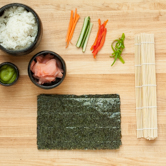
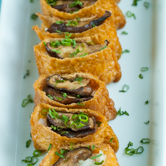
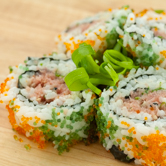
Your efforts were most impressive! Now, how about a Sushi party at your place? Buy an assortment of fish, vegetables and some sake, and you’re set!
Japanese Nori
These are sheets of seaweed we used to make rolls. Make sure the package is fresh and kept well sealed. They can absorb moisture very easily and lose their crispness. Remember to put the shiny side down before you apply the rice, and apply the rice using a minimal amount of liquid so that the nori doesn’t get soggy. It’s a great source of vitamins, protein, fiber, calcium, and iron — a superfood.
Seasoned rice vinegar
It can be found at most stores these days but if you can only find unseasoned rice vinegar, don’t sweat it, you can season it yourself! For every cup of rice vinegar add 3 tablespoons of white sugar, a pinch of salt, and mix until dissolved. This is your seasoned rice vinegar!
Sushi rice
Don’t stress, it is forgiving! Look for Japanese rice or sushi rice. It’s a short fat grain of rice that is starchier than a long thin grain like basmati. The starch helps to make it sticky and keep its soft texture, even when it cools. Rinse the dry rice well, to remove extra starch. Cook with 1 part rice to 1 and ¼ parts water. Be sure to fan the rice as you transfer it from the cooking container to a non-metal bowl. When it is cool enough to touch, dress the rice with seasoned rice wine vinegar. Use about ½ cup seasoned rice vinegar for every 4 cups of cooked rice. Treat your rice gently, and do not over-mix it when introducing the vinegar to the rice.
Veggies
A matter of personal preference, but here are some of our favorites to play with: cucumber (Japanese or English), avocado, green onions, carrots, bell peppers, mango, red cabbage, sunflower or radish sprouts, and hearts of palm. Slice the veggies into thin strips to use in the maki rolls or use a mandoline.
Fish
There are so many wonderful options: Ahi Tuna, Albacore Tuna, and Salmon (sushi grade, ask your fishmonger) should all be readily available at a good fish store. Japanese markets will carry much more variety, often including more exotic choices like smoked eel, snapper, yellowtail, sea bass, cooked mini-shrimp, sashimi grade scallops, and ground tuna for your spicy tuna.
Furikake
A ready-made mix of black and white sesame seeds with nori flakes. This is for when you roll the rice on the outside, “uramaki.”
Togarashi
Roughly translated to chile pepper in Japanese. Found in small thin jars in Asian markets, its base is ground chilies. Ichimi Togarashi is just ground chilies. Shichimi Togarashi means 7 ingredients and therefore has 6 ingredients in addition to the chilies. The ingredients vary by brand, but the most common blends are ground chili peppers, roasted orange peel, black sesame seed, hemp seed, ground ginger, nori, and poppy seed.
Soy sauce
This is the salt for your sushi. Use in spicy mayo or in your spicy tuna. Gently dip pickled ginger in soy sauce and brush it onto your sushi like a paintbrush. We use a gluten-free Tamari soy sauce in class, but there are many varieties available. You could also substitute Bragg’s Liquid Aminos.
Wasabi
In the US we customarily use wasabi powder which is made of a blend of ingredients including horseradish and mustard. In Japan, actual wasabi is used. It is a root, similar to fresh ginger, but it is very expensive and perishable. You can find it in some specialty stores. You might also see a tube of wasabi paste. Tubes of wasabi may include preservatives and odd additional ingredients — so we prefer to use wasabi powder. Just mix the powder with water until you get the texture you desire.
Sake
The national beverage of Japan, it is a fermented alcoholic drink made from rice, also known as Japanese Rice Wine. It is produced with a brewing process more similar to beer than wine, where starch is converted into sugars that ferment into alcohol (as opposed to wine, which is produced by fermenting sugars that are naturally in fruit). Sake tends to have an ABV closer to strong wine. It can be served hot or cold. It pairs beautifully with sushi.
Types of Sushi
Nigiri: this is traditional sushi with a rice base and a piece of fish laid over the top with no nori
Maki: rolled sushi
Hosomaki: thin, one ingredient rolls
Futomaki: fat, 2-3 ingredient rolls, cut into 6-8 pieces, most common type of sushi in America
Uramaki: fat, 2-3 ingredient rolls, rice on the outside, rolled in sesame seeds
Temaki: cone-shaped, hand rolled with nori
Lacey rice
Resist the temptation to overload your nori with rice. Think “lacey” and spread just a handful or two across the nori, allowing some of the nori to peek through. Remember it will roll on itself multiple times, so if you use too much rice, your roll will be too fat and you’ll lose the flavors or the fish/veggies you put in the roll.
Compose your rolls
Don’t go for “the kitchen sink.” Really think about flavors, textures, colors and build a roll with balance. You will be well rewarded with fantastic sushi if you take the time to really plan out what to put in your rolls.
Rolling with rice on the outside
Plastic wrap is your best friend for Uramaki. Put rice on one side of the nori, flip it onto the plastic wrap and add your filling. Place the whole thing on the sushi mat, and when rolling, hold onto both the mat and the plastic wrap to extract it from the roll.
serves 4-6 people
10 Shitake musrooms fresh
1 packet of inari skins
A handful of scallions
2-3 tablespoons of Soy sauce
2-3 tablespoons of Mirin
2-3 tablespoons of balsalmic vinegar
You can buy Inari Skins at Mitsuwa, which are little pockets made of fried bean curd (soy). Open up the pockets, stuff in some sushi rice and sautéed shitake mushrooms and scallions. To make the shitake mushrooms, thinly slice about 10 shitakes. Heat a pan with vegetable oil until hot and add the mushrooms. You’ll notice that they will absorb the oil – don’t worry! After minute of sautéing over high heat, add a splash of soy sauce and a splash of mirin (a sweet Japanese sauce great for cooking and salad dressings). By a splash I mean 2 – 3 tablespoons. I also like to add a little balsamic vinegar. Let this liquid reduce while you finish cooking the mushrooms, and then, just as you take them off the heat, toss in a handful of chopped scallions. Delish!
serves 4
1 pound ground or cubed tuna
1/2 teaspoon sesame oil
1 teaspoon soy sauce
Chili oil and/or chili flakes (togarashi), to taste
3 teaspoons finely chopped scallions
1 teaspoon furikake
optional: mayonnaise
We talked a lot in class about the many many options for making spicy tuna. You can use just about anything you have on hand that is spicy: togarashi, wasabi, chile oil, hot sauce, sambal, sriracha, spicy mayo, fresh chilies, etc. Follow your own spicy palate and create the perfect spicy tuna for your taste, or you can use our basic recipe as a jumping-off point.